
By Slava Zborovsky · Updated
A New Jersey commercial seller pays the Realty Transfer Fee, plus the Graduated Percent Fee over $1 million only on Class 4A commercial property (not industrial or apartment buildings). To defer federal tax with a 1031 exchange, the replacement property must be identified within 45 days and received within 180 days. Entity sellers sign a GIT/REP-3 at closing instead of making an estimated tax payment.
Why owners are asking now
In New Jersey, "commercial real estate appraiser near me" and "commercial real estate inspector" both became breakout searches over the past 90 days, and "commercial real estate for sale" rose 80%. Owners are testing what their buildings are worth. The answer starts with what the building earns and what comparable buildings have actually sold for, and it ends with what you keep after fees and tax.
State fees depend on the property class
The Realty Transfer Fee applies to every conveyance of real property in New Jersey unless an exemption applies. The Graduated Percent Fee (1% to 3.5% of the whole price over $1 million, paid by the seller since July 10, 2025) applies only where the property is classed as Class 2 residential, Class 3A farm with a residence, Class 4A commercial other than industrial or apartment, or Class 4C cooperative units.
That means an industrial building sells without the Graduated Percent Fee, while a retail or office building over $1 million pays it. Form RTF-1EE, the affidavit for the fee, must be attached to every commercial property transfer. Selling the entity instead of the building does not avoid it: New Jersey's Controlling Interest Transfer Tax, imposed on the seller, applies to the transfer of a controlling interest in an entity that owns Class 4A commercial property. It applies when the property's value is over $1,000,000, and a seller who pays the Graduated Percent Fee on the deal is exempt from it. Talk to your attorney before structuring a sale either way.
| Commercial sale at $3,000,000 | Class 4A commercial | Industrial |
|---|---|---|
| Realty Transfer Fee (standard rate) | $33,775 | $33,775 |
| Graduated Percent Fee | $75,000 | Not applicable |
Illustration using standard RTF rates for consideration over $350,000. Confirm classification and fees with your attorney.
The 1031 exchange: deadlines that do not move
Under Internal Revenue Code Section 1031, when you exchange real property held for business or investment for other like-kind real property, you generally do not recognize gain. Since 2018, Section 1031 applies only to real property. Real properties are generally like-kind regardless of whether they are improved or unimproved, but U.S. property is not like-kind to property abroad. Cash or other property you receive is taxable to that extent.
In a deferred exchange, the replacement property must be identified within 45 days after you transfer the property you are giving up, and received within 180 days or by the due date of your tax return including extensions, whichever is earlier. The exchange is reported on IRS Form 8824. Line up a qualified intermediary and your replacement search before you sign a contract, because day one is the closing.
An exchange timeline
Counted from the day you transfer the property you are giving up:
| Day | What has to happen |
|---|---|
| Before listing | Line up a qualified intermediary (QI) and start looking at replacement property |
| Day 0 | Close on the sale of your property |
| By day 45 | Identify replacement property in writing |
| By day 180 (or your return due date, if earlier) | Receive the replacement property |
| Tax return | Report the exchange on Form 8824 |
Source: IRS Instructions for Form 8824. Property held primarily for sale does not qualify.
Forms at closing for an LLC or corporation
A corporation, partnership or multi-member LLC, resident or not, completes and signs Form GIT/REP-3 at closing, checking the box that the seller is not an individual, estate or trust. With that exemption properly claimed, no estimated payment form is filed, and the Division confirms a corporation does not pay the 2% nonresident withholding. Individuals who own commercial property in their own names and live outside New Jersey do; see selling in New Jersey and moving out of state.
Case study: 5 Mars Court, Montville
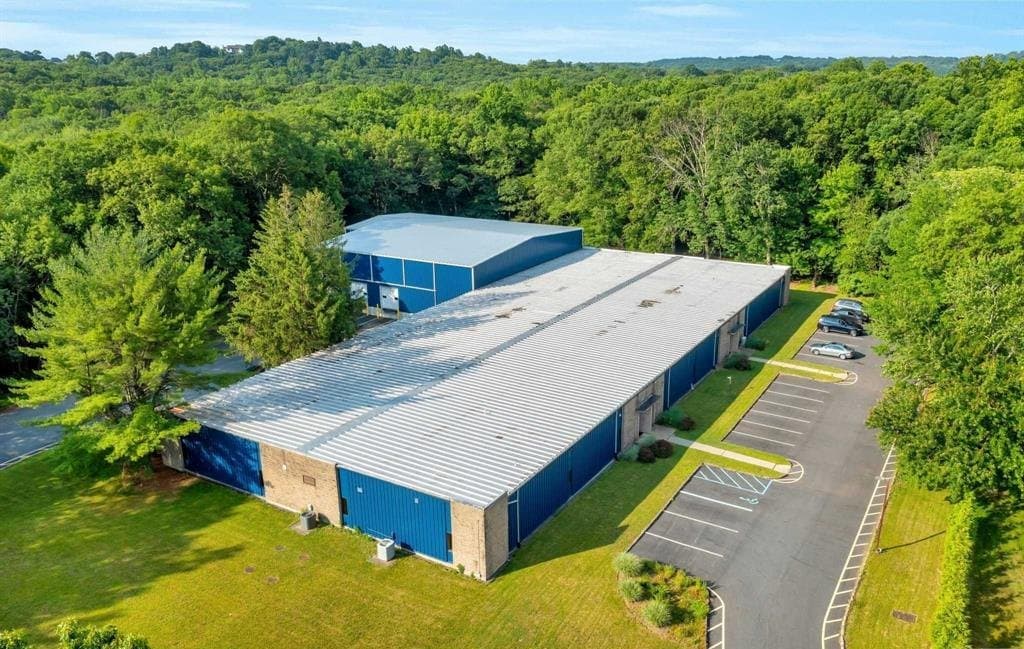
5 Mars Court is a 34,500 square foot industrial building in the Mars Court park in Montville, suited to light manufacturing, warehousing and distribution, with 3,900 square feet of office space, ceilings from 15 to 24 feet, updated HVAC, LED lighting and parking, minutes from Routes 46, 80 and 287.
Slava listed it at $7,495,000 and represented the seller. It closed on February 14, 2025 at $7,250,000, or $210 per square foot. See the sale and the commercial division.
| 5 Mars Court | |
|---|---|
| Type | Industrial |
| Building | 34,500 sq ft, 3,900 sq ft office |
| List price | $7,495,000 |
| Sale price | $7,250,000 |
| Price per sq ft | $210 |
| Closed | February 14, 2025 |
| Slava's role | Listing broker, represented the seller |
Before you list a commercial property
Have these ready before you test the market:
- A rent roll and leases, with expirations and options.
- Two to three years of operating income and expenses.
- Any environmental reports, surveys and certificates of occupancy.
- Your tax position: basis, depreciation taken, and whether you will exchange.
- The property's tax class, which decides the Graduated Percent Fee.
Selling soon? Get a written valuation or use the NJ closing-cost calculator.
- Does the NJ mansion tax apply to commercial property?
- The seller-paid Graduated Percent Fee applies to Class 4A commercial property over $1 million, but not to industrial or apartment property.
- What are the 1031 exchange deadlines?
- The replacement property must be identified within 45 days after you transfer the property you give up, and received within 180 days or by your tax return due date including extensions, whichever is earlier.
- Does a 1031 exchange avoid the New Jersey estimated tax payment at closing?
- A 1031 exchange can make the sale exempt from New Jersey's estimated Gross Income Tax payment at closing. The Division of Taxation's GIT/REP guidance also covers partly exempt exchanges: if you find after the deed is recorded that only part of the transaction qualified, you make an estimated payment for the rest on Form NJ-1040-ES.
- What does an LLC or corporation sign at a New Jersey closing?
- A corporation, partnership or multi-member LLC completes Form GIT/REP-3, checking that the seller is not an individual, estate or trust. The Division of Taxation says a corporation does not pay the 2% nonresident withholding.
Sources
- NJ Division of Taxation, Realty Transfer Fee
- NJ Division of Taxation, Graduated Percent Fee notice (July 2, 2025)
- NJ Division of Taxation, Controlling Interest Transfer Tax
- IRS, Like-kind exchanges: real estate tax tips
- IRS Instructions for Form 8824, Like-Kind Exchanges
- NJ Division of Taxation, GIT/REP (nonresident seller) FAQs
- Google Trends, New Jersey, past 90 days

Written by Slava Zborovsky, Broker Associate with The Agency One Rock and a licensed New Jersey broker since 2007. About Slava · LinkedIn